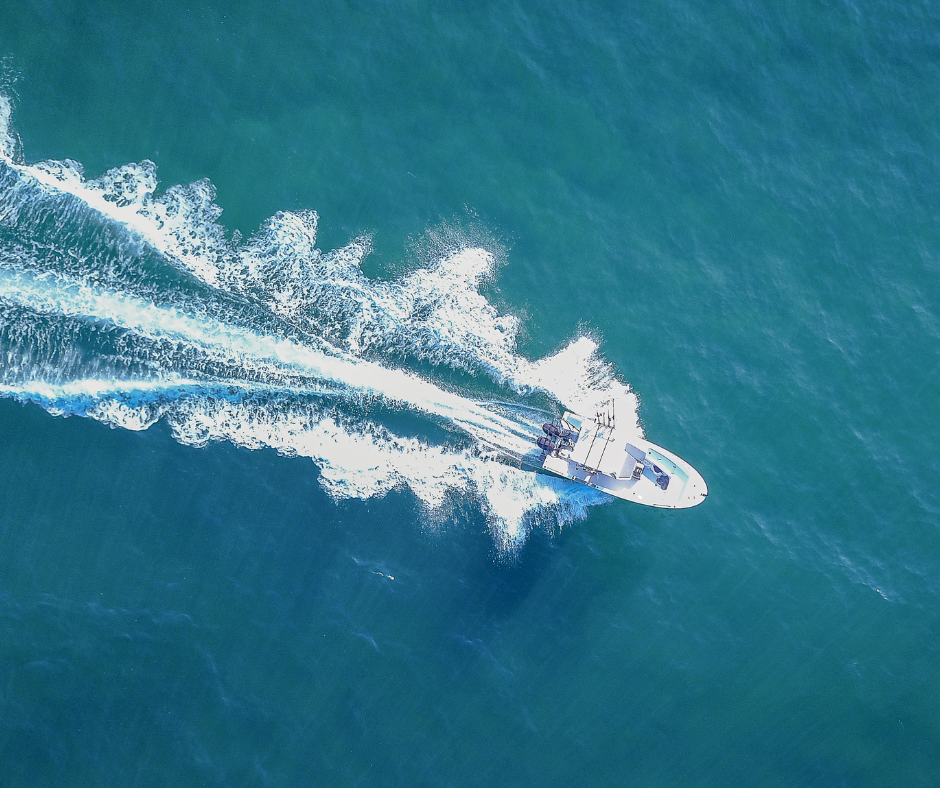
Boca Inlet stands as one of the most iconic – and notoriously perilous – waterways in the entirety of South Florida. Its picturesque beauty, serving as a direct gateway from the bustling Intracoastal Waterway to the vast expanse of the Atlantic Ocean, draws countless recreational and commercial vessels. However, this very popularity, coupled with unique hydrological and geographical characteristics, transforms this scenic location into a high-risk zone for marine incidents. With a constant stream of high boat traffic, rapidly shifting tidal currents, unpredictable ocean waves and wakes from larger vessels, and particularly narrow passageways, the Boca Inlet has unfortunately earned a reputation for more than its fair share of boating accidents. When such an incident occurs in these challenging waters, the immediate and critical question that arises is: who, under the intricate framework of Florida maritime law, is legally at fault?
In this comprehensive article, we will delve deep into the legal complexities surrounding boat accidents in Boca Raton, focusing specifically on those incidents that occur near or within the Boca Inlet. We will meticulously break down the multifaceted process of how legal fault is determined, explore the critical role of operator negligence, examine the specific types of statutory violations that can lead to liability, and explain how various forms of boat insurance coverage apply under the unique provisions of Florida law. Our aim is to provide a detailed understanding for anyone who navigates these waters, or who may unfortunately find themselves involved in a marine accident.
Understanding the Boca Inlet: A High-Risk Zone Demanding Respect
Unlike the generally calmer, more predictable environments of the intercoastal waterways that crisscross Florida, the Boca Inlet represents a dynamic and often turbulent transition point directly into the open Atlantic Ocean. This geographical characteristic inherently introduces a series of significant challenges and hazards that demand heightened awareness and exceptional navigational skill from all vessel operators.
- Strong Tidal Currents: The inlet acts as a funnel, concentrating the immense volume of water moving in and out with the ocean tides. This results in strong tidal currents that can rapidly shift water levels, direction, and speed. A seemingly gentle current can quickly become a powerful force capable of pushing even large vessels off course, making precise steering and maintaining a steady heading incredibly difficult, especially for smaller boats or those with less powerful engines. Misjudging these currents is a primary factor in collisions with jetties, other vessels, or fixed structures.
- Sudden Waves or Wakes from Larger Vessels: The interaction between the outgoing/incoming tide and ocean swells often creates choppy, unpredictable waves, particularly when winds are strong or opposing the current. Furthermore, the passage of larger vessels – including sportfishing yachts, commercial boats, and even occasional larger pleasure craft – generates substantial wakes. These wakes, amplified by the narrow confines of the inlet, can destabilize smaller boats, cause passengers to be thrown overboard, or lead to collisions if operators are not prepared to safely cross or absorb them. The “washing machine” effect created by multiple wakes bouncing off the jetties and meeting conflicting currents can be particularly disorienting and dangerous.
- The Narrowness of the Inlet: The Boca Inlet is notoriously narrow, especially compared to the volume of traffic it handles. This confined space significantly reduces maneuvering room, making navigation difficult, particularly during peak hours, weekends, and holidays. Head-on approaches, passing, and overtaking maneuvers become inherently more risky. The jetties on either side, while serving a protective purpose, also create rigid, unforgiving boundaries that allow for little error margin, especially in adverse conditions.
- Shoaling and Shifting Sands: Inlets are naturally dynamic environments where sand can accumulate and shift, creating shoals or shallower areas that may not always be accurately depicted on older charts. Running aground, especially in heavy currents, can quickly lead to capsizing or severe damage to the vessel and injuries to its occupants.
- Fixed Structures: The presence of bridges, particularly the bridge spanning the inlet, adds another layer of complexity. Vessels must navigate through designated spans, often contending with strong currents and other boat traffic simultaneously.
These natural and man-made challenges collectively increase the inherent risk of collisions, vessels capsizing, passengers being ejected, and operator misjudgment, making every passage through the Boca Inlet an exercise in vigilance and skill.
Common Causes of Boat Accidents at the Boca Inlet: Understanding the Human Element
While the natural characteristics of the Boca Inlet contribute to its danger, the majority of boating accidents stem directly from human factors – specifically, operator error, negligence, or a disregard for established safety rules. Understanding these common causes is crucial for both prevention and for determining legal fault after an incident.
- Operator Inexperience and Lack of Training: A significant number of boating accidents involve operators who simply lack the necessary experience or formal training. Inexperienced boaters often underestimate the power of the current, misjudge distances, fail to anticipate waves, or are unfamiliar with proper navigation techniques in challenging conditions. They may not know how to correctly yield right-of-way, respond to unexpected conditions, or safely operate their vessel in close quarters. Florida law generally requires boaters born on or after January 1, 1988, to complete a boating safety course, but many older operators may lack formal education, and even certified operators may lack practical experience in dynamic environments like the Inlet.
- Speeding or Reckless Driving (Boating): Just as with cars, excessive speed is a major contributing factor to boating accidents. Operators failing to slow down when approaching the narrow, congested inlet, ignoring posted “no-wake” zones, or attempting dangerous maneuvers like “beating the wave” or jumping large wakes, can have devastating consequences. Reckless operation includes sharp turns, weaving through traffic, and operating too close to other vessels, swimmers, or fixed objects. Such behavior demonstrates a clear disregard for safety and others’ well-being.
- Poor Lookout and Inattention: A fundamental rule of safe boating, both at sea and in confined waterways, is to maintain a constant and proper lookout by sight and hearing. Many accidents occur because operators are distracted by passengers, mobile phones, onboard entertainment, or simply fail to pay adequate attention to their surroundings, other vessels, and potential hazards. This inattention can lead to delayed reactions or a complete failure to perceive an impending collision.
- Poor Visibility or Adverse Weather Conditions: The Boca Inlet is especially dangerous during periods of reduced visibility, such as heavy fog, torrential rain, or at night without adequate lighting. Sudden weather changes, like unexpected squalls or high winds, can quickly make the inlet treacherous, impairing an operator’s judgment and control. Operating in conditions beyond one’s skill level is a common form of negligence.
- Failure to Follow Navigational Rules (“Rules of the Road”): Boating has a strict set of international and inland “Rules of the Road” designed to prevent collisions. Violations of these rules are common contributing factors in accidents. This includes:
- Right-of-Way Violations: Failing to yield to the stand-on vessel.
- Improper Signaling: Not using proper sound signals when maneuvering or when visibility is restricted.
- Improper Passing/Overtaking: Attempting to pass in unsafe conditions or in restricted areas.
- Not Keeping a Proper Lookout: As mentioned above, a failure to continuously scan the horizon and surroundings.
- Lack of Navigation Lights: Operating at night or in low visibility without proper, functioning navigation lights.
- Alcohol or Drug Impairment (Boating Under the Influence – BUI): Operating a vessel under the influence of alcohol or drugs is a major factor in boating accidents and carries serious legal penalties, often mirroring those for driving under the influence (DUI). BUI significantly impairs judgment, reaction time, coordination, and the ability to maintain a proper lookout, making it a highly negligent act. Florida law defines BUI as operating a vessel with a blood alcohol content (BAC) of 0.08% or higher, or when one’s normal faculties are impaired.
- Mechanical Failure or Lack of Maintenance: While human error is dominant, mechanical issues can also cause accidents. This includes engine failure, steering malfunctions, electrical shorts, or equipment failure due to lack of proper maintenance. Owners and operators have a responsibility to ensure their vessel is seaworthy and properly maintained. Neglecting maintenance can be a form of negligence.
- Overloading or Improper Loading: Operating a vessel with too many passengers or too much weight, or with weight improperly distributed, can affect its stability and maneuverability, especially in choppy waters like the Boca Inlet. This can lead to capsizing or swamping.
- Hazardous Wakes: While some wakes are unavoidable, generating excessive wake in “no-wake” zones or causing damage to other vessels or property through negligent wake creation can also be a basis for liability.
How Is Legal Fault Determined in Florida Boating Accidents?
Under Florida law, boating accidents are generally handled similarly to car accidents, adhering to principles of negligence and statutory compliance. However, they also incorporate elements of federal maritime law, which can add layers of complexity. Determining liability typically involves a meticulous investigation into several key factors:
-
Negligence: Failure to Exercise Reasonable Care:
- The cornerstone of most personal injury claims, negligence in a boating context means that one or more parties failed to exercise the level of “reasonable care” that a prudent boater would under similar circumstances. This “reasonable boater” standard is applied to specific actions or inactions.
- Examples of Boating Negligence:
- Failing to maintain a proper lookout (as per Rule 5 of the Inland Navigational Rules).
- Operating at an unsafe speed (Rule 6).
- Failing to yield right-of-way (Rules 13-18).
- Operating a vessel that is not seaworthy due to lack of maintenance.
- Allowing an inexperienced person to operate a vessel without proper supervision.
- Failure to carry required safety equipment (flares, life jackets, fire extinguishers).
- Dropping anchor in a channel or an unsafe location.
- Operating in a marked “no-wake” zone at a speed that creates a wake.
- Improper fueling causing an explosion or fire.
- Failing to provide passengers with safety briefings or life jackets.
-
Statutory Violations: Breaking Maritime and FWC Regulations:
- Beyond general negligence, liability can be established if a boater violated any specific maritime laws (federal) or Florida Fish & Wildlife Conservation Commission (FWC) regulations. These are often considered evidence of negligence per se (negligence in itself).
- Examples of Statutory Violations:
- Boating Under the Influence (BUI) – Florida Statute 327.35.
- Reckless or Careless Operation – Florida Statute 327.33.
- Failure to Register or Title a Vessel – Florida Statute 328.01.
- Failure to have required safety equipment onboard (e.g., proper lighting, fire extinguishers, sound-producing devices, sufficient life jackets for all passengers).
- Violating speed limits or “no-wake” zone restrictions.
- Improper towing of skiers or tubers.
- Operating a vessel without proper lighting during restricted visibility or nighttime hours.
- Violating rules related to vessel capacity or overloading.
-
Modified Comparative Negligence: How Fault Divides Damages in Florida:
- Florida uses a “modified comparative negligence” standard for most personal injury cases, including boating accidents. This means that if multiple parties share some degree of fault for an accident, any damages awarded to an injured party will be reduced by their percentage of fault.
- The 51% Bar Rule: Crucially, under Florida’s modified comparative negligence law, if a party is found to be more than 50% at fault for the accident that caused their injuries, they are legally barred from recovering any damages from the other parties. This is a significant change from the previous “pure comparative negligence” standard and makes the determination of fault a highly contentious and critical aspect of any boat accident claim. Even a small shift in the determined percentage of fault can mean the difference between significant compensation and receiving nothing.
-
Witness Statements and Official Reports: The Foundation of Proof:
- Law Enforcement/FWC Reports: Reports filed by the Florida Fish & Wildlife Conservation Commission (FWC), local marine patrol (e.g., Palm Beach County Sheriff’s Office Marine Unit, Broward Sheriff’s Office Marine Unit), or the U.S. Coast Guard (USCG) play a critical role. These reports often include initial findings, diagrams, witness information, and officer observations regarding fault or contributing factors.
- GPS Logs and Vessel Data Recorders (VDRs): Many modern vessels, particularly larger ones, are equipped with GPS tracking systems or Vessel Data Recorders (similar to “black boxes” on airplanes). This data can provide crucial evidence regarding speed, course, position, and sudden maneuvers leading up to an accident.
- Eyewitness Accounts: Independent eyewitness statements provide valuable perspectives on the events leading to and during the collision.
- Vessel Inspection: Damage to the vessels themselves, analyzed by marine surveyors, can indicate points of impact, angles of collision, and speed.
- Photography and Video: Photos and videos taken at the scene by anyone involved or bystanders can be invaluable visual evidence.
-
Example Scenario: Who’s Liable? (Expanded Analysis)
- Imagine Boat A is attempting to exit the Boca Inlet at high speed during a strong outgoing low tide, significantly exceeding the posted no-wake speed limit for the channel. Meanwhile, Boat B is entering the inlet at a safe, controlled speed, maintaining a proper lookout. Suddenly, a large ocean swell or a wake from an unidentifiable larger vessel crashes into the inlet. Boat A, due to its excessive speed and lack of maneuverability in the conditions, swerves erratically and collides violently with Boat B.
- In this scenario, if it’s clearly shown that Boat A:
- Was speeding excessively within a marked “no-wake” or restricted speed zone.
- Ignored prominent “no-wake” signs and navigational warnings.
- Failed to maintain a proper lookout or operate at a safe speed for the conditions.
- And failed to yield right-of-way according to navigational rules.
- Then, Boat A’s operator is overwhelmingly likely at fault, and they, or their boat insurance provider, may be held liable for any damages or injuries sustained by those on Boat B.
- However, the investigation doesn’t stop there. If, during the course of the investigation, it’s also determined that Boat B’s operator, for instance, failed to use proper sound signals when approaching a blind bend, had defective or unlit running lights during low visibility conditions, or was distracted by a passenger and momentarily failed to maintain a proper lookout, they may also share a partial percentage of liability. Even if Boat B is found to be 20% at fault, their recovery from Boat A would be reduced by 20% under Florida’s modified comparative negligence standard. If Boat B were found 51% or more at fault, they would recover nothing. This highlights the critical importance of a thorough investigation to accurately assign fault.
What Role Does Boat Insurance Play in Florida Accidents?
In Florida, unlike auto insurance, boat insurance is not legally required for private recreational vessels. However, due to the high risks associated with boating, especially in busy waterways like the Boca Inlet, it is strongly recommended and often mandated by marinas for docking or by lenders for financed vessels. In the unfortunate event of a Boca Inlet accident, boat insurance becomes a crucial financial safety net.
Common types of boat insurance coverage, and their relevance in an accident, include:
- Liability Coverage: This is perhaps the most critical component. It pays for injuries to other people or damages to other boats or property that you, as the insured operator, cause. It covers legal defense costs if you are sued. Given the high cost of medical care and vessel repairs, sufficient liability coverage is essential to protect your personal assets.
- Collision Coverage: This coverage pays for damage to your own vessel from a collision with another boat, a submerged object, or fixed structures, regardless of who is at fault. This is similar to collision coverage on a car.
- Comprehensive Coverage: This protects your boat from non-collision damage, such as theft, vandalism, fire, sinking, or storm damage.
- Medical Payments (MedPay) Coverage: This relatively small but important coverage pays for reasonable and necessary medical expenses for you and your passengers, regardless of who is at fault. It’s often a lower limit (e.g., $1,000 to $10,000) but provides immediate funds for initial medical treatment.
- Uninsured/Underinsured Boater (UB/UIM) Coverage: This highly recommended coverage protects you if you are injured or your boat is damaged by an at-fault boater who has no insurance or insufficient insurance to cover your damages. Given that boat insurance is not mandatory in Florida, the risk of encountering an uninsured boater is significant.
- Salvage Costs and Towing: Many boat policies also include coverage for salvage operations (recovering a sunken or heavily damaged vessel) and towing expenses, which can be extremely high after a serious accident in ocean-access areas like the Boca Inlet.
- Personal Property Coverage: Often covers personal items onboard that are lost or damaged in an accident.
- Wreck Removal: Covers the cost of removing your boat if it sinks and becomes a hazard to navigation, a legal obligation.
It’s crucial for boat owners to understand their policy limits, deductibles, and any exclusions (e.g., coverage may be voided if the boat is operated recklessly, illegally, or under the influence of alcohol/drugs, or if it’s used for commercial purposes without a specific commercial policy).
What to Do After a Boat Accident at the Boca Inlet: Immediate Steps for Safety and Legal Protection
The moments immediately following a boat accident can be chaotic and disorienting, especially in a high-traffic, dynamic environment like the Boca Inlet. However, your actions during this critical period are paramount for ensuring safety, obtaining necessary medical attention, and preserving crucial evidence that will later support your legal claim.
-
Ensure Safety First: Prioritize Life and Limb:
- Attend to any injuries immediately. Check yourself and all passengers for visible and non-visible injuries.
- Call for help if anyone is seriously injured or overboard. Use your marine radio (VHF Channel 16) or cell phone (911).
- If possible and safe to do so, move your vessel to a secure location out of the main channel to prevent further collisions.
- Turn off your engine if there’s a risk of fire or further damage.
- Assess for leaks, fires, or other immediate hazards.
-
Notify Authorities: Essential for Official Documentation:
- For most boating accidents, especially those involving injury, death, significant property damage (typically over $2,000), or the disappearance of a person, you are legally required to report the incident to the appropriate authorities.
- Florida Fish & Wildlife Conservation Commission (FWC): This is the primary agency for recreational boating accidents in Florida. They will often investigate and generate an official report.
- Local Marine Patrol: Agencies like the Palm Beach County Sheriff’s Office Marine Unit or Boca Raton Police Marine Patrol may also respond.
- U.S. Coast Guard (USCG): For incidents in federal waters (ocean-side) or involving certain types of vessels (e.g., commercial), the Coast Guard may also be involved.
- Cooperate fully with law enforcement, but stick to the facts and avoid admitting fault (see below).
-
Exchange Information: Critical for Insurance Claims:
- Just like with car accidents, it is crucial to exchange comprehensive information with the operator of any other vessel involved. This includes:
- Names, addresses, and phone numbers of all operators and boat owners.
- Vessel names, registration numbers, and state of registration.
- Insurance company names and policy numbers for all vessels.
- Contact information for any passengers onboard each vessel.
- Be polite but firm in obtaining this information.
- Just like with car accidents, it is crucial to exchange comprehensive information with the operator of any other vessel involved. This includes:
-
Document the Scene: Evidence is King:
- Take Photos and Videos: Use your smartphone to take extensive photos and videos of:
- Damage to all vessels involved (close-ups and wide shots).
- The location of the accident (landmarks, channel markers, jetties, bridge).
- Weather conditions (sky, water chop).
- Any visible injuries.
- Other vessels in the vicinity.
- Any contributing factors like debris in the water.
- Witness Contact Information: Get names and phone numbers of all independent witnesses. Even if they don’t seem important at the time, their unbiased account can be invaluable later.
- Preserve Data: If your vessel has GPS logs, chart plotter data, or onboard camera footage, preserve this immediately. Do not delete or overwrite it.
- Note Environmental Factors: Document time of day, tide level (high/low), current strength, wind speed/direction, and sun glare, as these can all be contributing factors.
- Take Photos and Videos: Use your smartphone to take extensive photos and videos of:
-
Seek Medical Attention Immediately:
- Even if you feel “fine” or only have minor pain, seek a medical evaluation as soon as possible. The adrenaline and shock of an accident can mask significant injuries (e.g., whiplash, internal bleeding, concussions) that may manifest days or weeks later.
- Prompt medical documentation creates an irrefutable link between the accident and your injuries, which is vital for your personal injury claim.
-
Consult a Maritime Personal Injury Lawyer Quickly:
- Boating accident cases can get complicated incredibly quickly, often involving a blend of state and federal maritime laws. You’ll need a lawyer intimately familiar with Florida boating laws, the intricacies of the U.S. Coast Guard regulations, and the unique challenges of local waters like the Boca Inlet.
- Do not speak to insurance adjusters from the other side without legal counsel. Their goal is to minimize payouts.
Legal Representation Matters: Why Specialization in Boating Accidents is Crucial
Navigating the aftermath of a boat accident, especially in complex waters like the Boca Inlet, demands highly specialized legal expertise that goes beyond a general personal injury practice. Federal maritime law, also known as admiralty law, can apply to accidents that occur on navigable waters, which includes the Boca Inlet and the Atlantic Ocean. This body of law has unique rules regarding negligence, liability, and damages that differ significantly from typical state-level car accident laws.
At Roselli McNelis, our attorneys possess a deep understanding of the complexities of boating accidents, particularly in high-risk zones like the Boca Inlet and across South Florida’s diverse waterways. Our specialized approach includes:
- Maritime Law Expertise: We are intimately familiar with both Florida boating statutes (e.g., FWC regulations) and federal maritime laws, including the Inland Navigational Rules, Jones Act (for commercial mariners), and Limitation of Liability Act. This dual understanding is critical for building a robust case.
- Working with Marine Safety Experts: We collaborate with experienced marine safety experts, accident reconstructionists, and nautical engineers. These professionals can analyze navigational data (GPS, AIS), vessel black box recorders, weather conditions, currents, and hydrodynamics to provide expert testimony and conclusively determine how an accident occurred and who was at fault.
- Analyzing Navigational Data: Our team has the capability to interpret complex GPS logs, AIS (Automatic Identification System) data, and other electronic navigation records to pinpoint vessel speeds, courses, and maneuvers leading up to the collision, offering objective evidence of negligence.
- Leveraging Florida’s Maritime Laws and Precedent: We leverage our in-depth knowledge of Florida’s specific boating laws, recent court decisions, and legal precedents to build the strongest possible case for our clients, especially concerning comparative negligence and BUI.
- Comprehensive Damage Calculation: Beyond immediate medical bills, we work to ensure our clients recover full compensation for all damages, including:
- Current and future medical expenses (hospital stays, surgeries, rehabilitation, medications).
- Lost wages and loss of future earning capacity.
- Pain and suffering (physical pain, emotional distress, mental anguish, loss of enjoyment of life).
- Property damage to your vessel and personal belongings.
- Other related expenses (e.g., salvage, towing, rental vessel).
- Aggressive Negotiation and Litigation: We handle all communications and negotiations with aggressive insurance companies who seek to minimize payouts. If a fair settlement cannot be reached, we are prepared to take your case to trial, fighting tirelessly for your rights in court.
Whether you were injured as a passenger, an operator of another vessel, or even a bystander near the inlet, our experienced team can help you navigate the legal complexities, accurately determine liability, meticulously calculate damages, and aggressively pursue your legal rights to secure the compensation you deserve.
Specific Challenges at Boca Inlet: A Deeper Dive
The Boca Inlet’s unique characteristics contribute to its accident rate in specific ways that demand specialized legal attention:
- The “Washing Machine” Effect: The combination of strong tidal currents, ocean swells, and the wakes from numerous boats, all confined within the narrow jetties, often creates a chaotic and unpredictable “washing machine” effect. This turbulent water can be incredibly dangerous for smaller vessels, making it difficult to maintain control, leading to swamping, capsizing, or passengers being thrown about. Proving negligence in such conditions requires expert analysis.
- Congestion During Peak Times: During weekends, holidays, and favorable weather conditions, the Boca Inlet becomes extraordinarily congested. This high density of traffic, combined with varying boat sizes and operator experience levels, significantly increases the risk of collisions. Navigational rules become even more critical to follow.
- Interaction Between Diverse Vessel Types: The inlet sees everything from small fishing skiffs and personal watercraft (PWCs) to large sportfishers, luxury yachts, and even occasional commercial traffic. Each vessel type has different maneuverability, speed capabilities, and wake characteristics, creating complex interactions and heightened risks of misjudgment.
- Challenges for Law Enforcement and Investigation: While FWC and local marine patrols are diligent, the sheer volume of traffic and the dynamic nature of the inlet can make immediate accident investigation challenging. Evidence can be quickly lost due to currents, tides, or passing vessels. This emphasizes the need for an independent, swift investigation by legal counsel.
- The Role of the Jetties: The concrete jetties that define the inlet, while necessary for navigation and preventing shoaling, are unforgiving structures. Collisions with jetties due to currents, waves, or operator error can cause severe damage and injuries, often requiring complex salvage operations.
Prevention and Responsibility: Promoting Safer Boating in South Florida
While we are here to help accident victims, preventing these incidents in the first place is always the ideal outcome. Responsible boating in challenging waterways like the Boca Inlet demands adherence to best practices and regulations.
- Boater Education Courses: Florida law mandates that anyone born on or after January 1, 1988, must complete an approved boating safety course to operate a vessel powered by a 10 horsepower or greater motor. However, all boaters, regardless of age, should consider taking advanced boating safety courses that cover navigation, collision avoidance, and emergency procedures.
- Vessel Maintenance Checks: Before every outing, conduct a thorough check of your vessel’s essential systems: engine, steering, fuel, electrical, and navigation lights. Regular professional maintenance is crucial to prevent mechanical failures.
- Checking Weather and Tide Charts: Always consult the latest weather forecasts, marine conditions, and local tide charts before heading out, especially when planning to traverse an inlet. Understand how wind and current interact.
- Maintaining Proper Lookout: Designate someone (or yourself) to maintain a vigilant, continuous lookout by sight and hearing at all times. Avoid distractions.
- Adhering to Speed and Wake Restrictions: Respect all posted “no-wake” zones and speed limits. Be mindful of your wake, especially in narrow channels or near docked boats, as excessive wakes can cause damage or injury.
- Having Required Safety Equipment: Ensure you have all legally required safety equipment onboard, in good working order, and easily accessible (e.g., sufficient life jackets for all passengers, fire extinguisher, sound-producing device, visual distress signals).
- Never Boat Under the Influence (BUI): Alcohol and drugs impair judgment, coordination, and reaction time. BUI is illegal, dangerous, and will almost certainly negate your ability to recover damages if you are involved in an accident.
Respect the Water, Know Your Rights
Boating in South Florida, particularly around iconic and challenging waterways like the Boca Inlet, offers unparalleled beauty and enjoyment. However, these waters demand respect, caution, and a thorough understanding of both nautical rules and potential hazards. If, despite your best efforts, an accident occurs, understanding who is legally at fault is absolutely essential for securing the compensation you deserve to cover medical expenses, lost wages, and other damages. The complexities of state and federal maritime law mean that navigating an injury claim alone can be a daunting, and often losing, battle.
Serving the communities of Boca Raton, West Palm Beach, Jupiter, and all of South Florida, Roselli McNelis stands ready to guide you through every step of your injury claim. Our specialized expertise in boating accidents ensures that your rights are protected, your case is meticulously investigated, and your claim is aggressively pursued. Don’t let the legal intricacies prevent you from seeking the justice you deserve after a traumatic boating incident.
Call us today for a free consultation and find out how our expertise can make a difference in your case.